
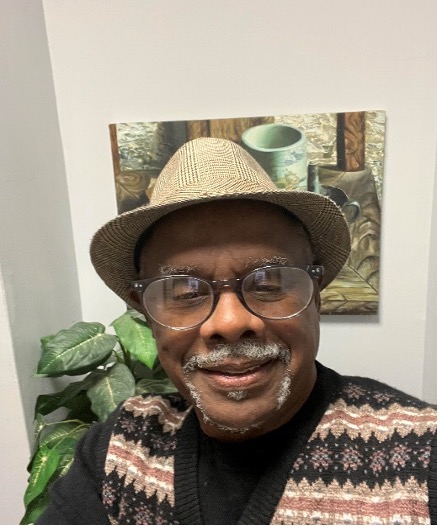
“I don’t know if you watched it or not, but this year’s Dr. Martin Luther King Day celebration at Ebenezer Baptist Church here in Atlanta was awesome,” I said to Deborah Levine, Founder/Editor-in-Chief of the American Diversity Report.
After rattling off the names of some of the speakers, among them Dr. King’s daughter Dr. Bernice King, John C. Maxwell, Senator Rafael Warnock, Reverend A. R. Bernard, Atlanta Mayor Andre Dickens and others, she stopped me mid-sentence and asked if any of the speakers were Jewish. Oops!
Although I didn’t have an immediate recollection, I confirmed later that Cantor Nancy Kassel, Temple Beth Tikvah was in fact one of the speakers. Lesson learned.
So, caught off guard by my “deer caught in the headlights” moment I wondered what that lapse in memory said about me and, at a deeper level, the minimized or largely forgotten historical relationships between Jewish and African Americans, ones that have managed to stand the test of time despite occasional relational challenges, arguably the most recent of which are strong emotions about Israel’s role in Gaza that have put a damper on some of those relationships and dialogues.
Anyway, to get to Deborah’s request for me to write something for the American Diversity Report that could help her restart her Black/Jewish dialogues, she reminded me that it was almost two years ago that I’d written, “Jewish Allies in African American History.” Talk about a time-saving boon if ever there was one, she’d just handed me one. Here’s what I wrote with a few minor tweaks and additions:
Dr. Martin L. King, Jr., Rosa Parks, Medgar Evers and Fannie Lou Hamer are some of the many leaders who paved the way through the rocky history of the Civil Rights movement in the United States. But the movement would not have succeeded without the contributions of people from all races, among them philanthropist Julius P. Rosenwald, whose name is associated with hundreds of schools for Black students throughout the south. Another case in point is the relationship between Dr. King and close friend and advisor Stanley Levinson, a Jewish American. And I could go on.
In his, “The Difference It Made When Two White People Made the Ultimate Sacrifice for Civil Rights,” writer William Spivey said “In telling Black history, the sacrifices of white people aren’t always remembered. Without the combined efforts of Black and white people, success will always be a goal and not a result.” The two people he referred to were Andrew Goodman and Michael Schwerner, Jewish Americans who lost their young lives with African American James Chaney while registering Black voters in Mississippi.
Back to Mr. Rosenwald.
Between 1917 and 1932, nearly 5,000 rural schoolhouses known as Rosenwald schools came to serve more than 700,000 Black children over four decades. It was through the shared ideals and a partnership between Booker T. Washington, an educator and prominent African American thought leader and Rosenwald, a German-Jewish immigrant who accumulated his wealth as head of the retailer, Sears, Roebuck & Company, that Rosenwald schools would come to comprise more than one in five Black schools operating throughout the South by 1928. In Georgia, 242 schools were constructed with the aid of Rosenwald funds, and 103 of the state’s counties had at least one Rosenwald school.
Today only about 500 schools remain, relics of a time before segregation ended in 1954. Some have been repurposed into museums, rebuilt or closed down completely.
Rosenwald had a simple philosophy when it came to philanthropy, “What I want to do is try and cure the things that seem wrong.” He was deeply concerned about justice for all and believed that the plight of African Americans was connected to the inequities faced by Jews throughout history. Therefore, his connection with Booker T. Washington was natural. He met Washington in Chicago in 1911 at a fundraiser and was inspired by Washington’s vision, one he also shared.
Unfortunately, Rosenwald’s diverse humanitarian legacy is largely unknown today due to his practice of keeping his name off the projects he funded. But his business acumen helped create a retail revolution through his leadership of Sears, Roebuck & Company, and his generous investment in people, particularly African Americans, made a lasting impact on the country in the early 20th century and beyond.
Inspired by Booker Washington in the early 1900s, in 1917 Rosenwald established the Julius Rosenwald Fund, the chief purpose of which was the improvement of education for African Americans. Augmented by local taxes and private gifts and working in partnership with Washington, the fund paid for the construction of roughly 5,000 schools—later dubbed Rosenwald schools—in 15 southern states. The fund also gave fellowship grants to Black artists and writers, including Marian Anderson, Maya Angelou, W.E.B. Du Bois and Langston Hughes.
Now here’s a little-known fact: Rosenwald’s philanthropic efforts in funding schools also benefited African Americans with his support of the Young Men’s Christian Association (YMCAs) facilities. YMCAs could be found in white communities across America but YMCAs in African American communities often lacked the resources of their white counterparts. In 1910, the YMCA approached Rosenwald with a proposal to build a new location in Chicago. He agreed, but only if a facility for African Americans was also constructed. “I won’t give a cent to this $350,000 fund,” Rosenwald told the group, “Unless you will include in it the building of a Colored Men’s YMCA.”
Now to add another reminder in the history of Jewish/African American relationships, 40 years ago – January 28, 1986, to be exact – the NASA space shuttle Challenger disaster snuffed out the lives of seven astronauts, among them physicist Dr. Ronald E. McNair, whose Ph.D. advisor and mentor was Dr. Michael Feld, a Jewish American. An expert in the sport, McNair taught karate not only to Feld’s kids but also to youth in South Boston during a time of racial unrest in the city.
Now before we bring this narrative to a close, it’s important not to ignore that historical flashpoints have strained Black–Jewish relations. For much of U.S. history, African Americans and Jewish Americans have occupied a complicated, sometimes intimate, sometimes adversarial relationship. At times, the two communities have stood shoulder to shoulder in struggles for justice; at other times they have found themselves divided by mistrust and misunderstanding.
Recently wrote Dr. Warren J. Blumenfeld author of “The What, The So What, and The Now What of Social Justice Education,” and Co-Editor of Readings for Diversity and Social Justice, “disputes over affirmative action, Middle East politics, and statements by political and religious leaders have inflamed tensions. Further exacerbating matters are media amplification that often reduces these conflicts to caricatures: Blacks as antisemitic, Jews as racially insensitive or manipulative.”
“But if there is hope for better understanding, it lies in honest, sometimes uncomfortable communication rather than on polite conversations that avoid conflict, but engagement that confronts real issues directly.”
So, in the end should dialogues between African and Jewish Americans (and other identities) forge ahead despite a shared history fraught with ups and downs, but with an optimistic hope for the future? Well, the rhetorical question answers itself with a resounding yes! And nothing would annoy the naysayers and profiteers of division more.
Nothing!
Terry Howard is an award-winning writer, a contributing writer with the Chattanooga News Chronicle, The American Diversity Report, The Douglas County Sentinel, TheBlackmarket.com, recipient of the Dr. Martin Luther King, Jr. Leadership Award, and third place winner of the Georgia Press Award.
