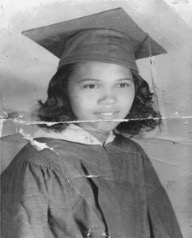
Babara Johns
________________________________________________________________________________________
Note: Not long ago, this author co- sponsored a trip from central Virginia to Farmville, Virginia for a visit to the R. R. Moton Museum (info@motonmuseum.org). Mounted prominently on the wall in the museum’s auditorium is a picture of 16-year-old Barbara Johns, who led a protest that changed trajectory of history. Here’s her story.
20 years ago, Pulitzer Prize winning columnist Leonard Pitts, Jr. penned words that have held their meaning and significance to this day….“Few forces are more compelling than a soul grown exhausted enough for change.”
Well, the “soul” he had in mind was Rosa Parks, a 42-year-old department store seamstress who refused to give up her seat on a public bus in Montgomery, Alabama to accommodate a white man. Parks’ defiance that December day in 1955 ignited the launch of the epoch that came to be known as the Civil Rights movement in the United States.
But wait! You see, four years before Parks’ act of courage, 600 miles north of Montgomery a Black girl 26 years her junior had similarly grown exhausted enough change. That girl was Barbara Johns, a student at segregated R. R. Moton high school in Farmville, Virginia. Like Parks, it is unlikely that Johns could have foreseen the eventual impact of her decision on history.
Now to put the Johns story into perspective, while 16-year-old girls today are busy with schoolwork, shopping, sleepovers with other girls and competing for the attention of boys, young Barbara Johns was busy organizing a protest that would eventually break the back of school segregation across the nation. So, if you are the parent of a 16-year-old girl today – be you white, Black, Asian, Latino, etc. – let that sink in a moment.
Which brings us to the urgency of now where we find ourselves in the throes of a conscious strategy to erase reminders of the ugliness of some undeniable truths about the history of race in the United States. But as uncomfortable as reminders may be, they can be effective antidotes to denials, ignorance and efforts to sweep those truths under the rug.
What follows is a snapshot of the Babara Johns story put together from research and recounts from survivors and descendants of students who attended Moton during that turbulent time:
The Robert Russa Moton High School Johns attended was the only public high school for Black students in Prince Edward County, Virginia. It was built for about 180 students, but more than 400 were trying to learn there by 1951. But instead of building a larger school, the county put up wooden classrooms for the Black students covered in tar paper, that had no plumbing, poor heating and roofs that leaked when it rained.
During cold weather, students had to sit through class wearing coats. A potbelly stove made one part of the room hot while children sitting farther away sat nearly freezing in overcoats. By contrast, white students in Farmville had better classrooms, indoor plumbing, a cafeteria, a gym and science labs at their school.
Well, Barbara Johns decided she had seen enough and talked to one of her teachers about the conditions at Moton. When the teacher asked Barbara why she had not done something about it, young Johns took that question seriously and started secretly building a plan. Believing that the county might finally listen if hundreds of students stood together, Barbara brought a small group of students into the plan.
They worked quietly for months because they knew adults could stop them if the plan became known too early. They made signs and talked about what they would do if the police showed up and the chance that some of them could be arrested and gave their secret plan a name…. The Manhattan Project.
On the morning of April 23, 1951, Barbara and the students were ready. But since they needed the principal to be away from the school, a student made a phone call in a disguised voice and reported trouble somewhere else in town. The principal left. Soon teachers were told to bring their classes into the auditorium for an assembly where more than 400 students were present. When the curtain on the stage opened Barbara Johns was standing where the principal normally stood.
When some teachers tried to stop what was happening Barbara took off her shoe and hit it against a wooden bench until the room became quiet. She told the teachers to leave. Once they were gone, Barbara turned back toward the students and told them why they had been called together. She cited their crowded school, the leaking buildings and the way Black students were being treated. When she told them they were going to walk out, hundreds of students followed her.
The strike continued for two weeks and soon caught the attention of NAACP lawyers who came to Farmville and met with the students. They told them that they were willing to help but wanted to take the fight much further, to challenge school segregation itself which meant asking the courts to end separate schools for Black and white children across the country.
In May 1951, the case Davis v. County School Board of Prince Edward County was filed. A protest started by teenagers was now moving through the courts. The people behind the protest faced pressure and threats. Barbara’s family became worried enough about her safety and decided to send her away. She moved to Montgomery, Alabama, and lived with her uncle Dr. Vernon Johns, himself a native of Farmville and fiery pastor who preceded Dr. Martin L. King, Jr. at Montogomery’s Dexter Avenue Baptist church. Sadly, the girl who had led hundreds of students out of school had to finish her own high school years away from home. But the case kept moving forward.
Davis v. County School Board became one of five school cases brought together before the Supreme Court. Those cases became known together as Brown v. Board of Education.
In 1954, the Supreme Court ruled that racial segregation in public schools was unconstitutional. Even then, Prince Edward County refused to accept integration easily. County officials later closed the entire public school system rather than integrating all schools.
While white kids continued their education in private schools, public schools stayed closed from 1959 until 1964. Many Black children lost years of normal education because of that decision. Some were sent away to live with relatives so they could attend school somewhere else. Others simply lost years of schooling they could never get back and many toiled away on local farms picking tobacco.
After leaving Farmville, Barbara Johns went on to college, got married, raised a family and later worked as a school librarian in Philadelphia. She died in 1991 at the age of 56. In 2025, a statue of Barbara Johns was unveiled inside the United States Capitol. Virginia chose her statue to replace that of Confederate General Robert E. Lee.
Now fast forward to the years after the protest in Farmville when Dr. King participated in the planning of the protest that led to the famous bus boycott in Montgomery, the march to Selma and other places that led to desegregation of public facilities and the passage of the Voters Rights Act.
But remember that the blueprint for the planning and execution of ensuing protests in Alabama and throughout the south was forged 600 miles away, and was the brainchild of 16-year-old Barbara Johns, a young lady who simply had had enough.
Some may remember, “And now you know the rest of the story,” the famous sign off by legendary American radio broadcaster Paul Harvey. Well now you know that the rest of the story of the struggle for Civil Rights in the United States includes the courageous story of Barbara Johns who, like Rosa Parks, simply had enough.
Terry Howard is an award-winning writer, a contributing writer with the Chattanooga News Chronicle, The American Diversity Report, The Douglas County Sentinel, TheBlackmarket.com, recipient of the Dr. Martin Luther King, Jr. Leadership Award, and third place winner of the Georgia Press Award.