Me, I have an aversion to area codes. Some area codes, that is. See, I suffer from a strain of ACDS (Area Code Derangement Syndrome), a spike in stress between the time a call or text message pops up on my phone from certain recognizable area codes before I find out what the call is about. “Hey Terry, in case you did not hear, so-in-so passed away yesterday….” is a prime example of one that can make me to catch my breath.
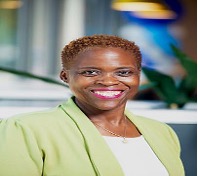
So, when my friend Ed’s name and number popped up the other day, my heart sank in anticipation of hearing about still another mutual friend who we had just lost. The last time he called it was to tell me about our friend – and ebullient “little sister” Kim Spight – who’d had a stroke. That 18 months ago. But this time he raved about the compelling story of Kim today whose story of grit and determination in response to her stroke is one for the ages, the source of inspiration, truth of the axiom “down but not out”.
But first to put this into perspective, every year more than 795,000 Americans have a stroke, and millions are living with the effects of one right now. Recovery looks different for everyone. Some people regain most of what they lost. Others live with lasting changes in strength, balance, speech, memory, or independence.
But back to Kim.
Now at the risk of a grave disservice to her impressive curriculum vitae, Kim is a Strategic Account Manager with 25 years of experience cultivating long-term partnerships across the Technology, Transportation, Industrial and Manufacturing sectors. Originally from Memphis, Kim holds a Bachelor’s in Economics from Howard University and an MBA from the University of Dallas.
In 2024, Kim had a stroke on a train on her way to church. Although she had no immediate family in Dallas, what she did have was a community she’d built over decade. She spent 110 days in the hospital and inpatient rehabilitation center and progressed from 0/5 strength on her left side to driving independently, walking with a quad cane and living a full life.
During those 110 days, Kim realized something critical: that stroke recovery tools existed, but they were scattered everywhere. Survivors typically leave the hospital with clinical checklists, then spend months hunting across dozens of websites for guidance on post-stroke fatigue, caregiver coordination, and emotional recovery. Kim wanted more than just clinical information. She wanted a resource where survivors, caregivers and supporters could feel supported and encouraged. So, she built it. (Review it here https://www.fromhere.health/)
Despite her busy schedule, Kim was gracious enough to grant time for an interview.
What does a typical day look like for you now?
I thank God for waking me up every morning! My day starts with taking care of my dogs. I can walk them 3–4 miles daily like I did before my stroke. From there, my day is a mix of driving my digital platform and modernizing my church’s technology and communication structure. Because I’m in an intentional job search, a significant block of time goes there. With 15+ years managing enterprise accounts and renewals, I’m looking for a role where I can do what I do best: owning the client relationship and managing the internal operations that keep everything running. Thus, a typical day now looks a lot like it did before my stroke. But I am deeply intentional about everything else.
As a user of AI tools, how do you project the future use of those tools in early detection, prevention and recovery from strokes?
Honestly, I’m cautious about this question because I see too many people outsourcing critical health decisions to AI. Will AI eventually play a larger role? Absolutely. But we’re not there yet, and we won’t be until the technology and clinical evidence catch up. But here’s what I do believe: AI is a powerful tool for research and discovery. But it should never replace your medical professional. Unless you’re deeply versed in how these tools work, their capabilities and their limits, AI can do more harm than good in healthcare. My advice is simple: use AI for basic research and learning. But for any health decision, listen to your medical professional. That’s what they’re trained to do. What I’m doing with From Here is different. I built an AI-powered platform that’s guided by clinical advisors, validated by healthcare providers, and designed to support the work your doctor is doing, not replace it. Folks should make their own decisions but that’s the model I trust.
What advice would you offer a younger you from decades ago?
Great question. Someone shared this advice with me a few years ago, and I wish I had internalized it decades ago: Do what makes you happy and gives you energy, not what others expect you to do. Coming out of college, building a career, and starting a family, it’s incredibly easy to just default to the script everyone else wrote for you. I’d tell my younger self to block out the noise. Do what you truly want to do, and don’t let anyone else dictate who you should be.
A breast cancer survivor wrote that her experiences taught her that healing involves more than medical treatment. It requires emotional safety, companionship, spiritual grounding, and practical care. How does her perspective square with yours?
Her perspective aligns completely with mine. Having survived thyroid cancer eleven years ago and now recovering from a stroke, I know firsthand that medicine only solves part of the equation. True healing requires that holistic framework. For me, spiritual grounding is my foundation. Practical care and companionship came from my daughter, who moved into my house to manage my life and care for my dogs while I was away for four months. Emotional safety came from learning to be vulnerable enough to ask my community for help and from realizing they were entirely willing to give it. Healing is a full-ecosystem project. You can’t just fix the body; you have to create a safe space for your mind and spirit to heal too.
What did you learn the most about yourself and others before, during, and after your stroke?
Before: I used to think that being strong meant doing everything myself and keeping total control. I managed enterprise accounts, organized community projects and took care of everyone else. I didn’t think I needed to rely on others.
During: When the stroke happened, control was instantly taken out of my hands. During that time, I learned that true strength isn’t about being bulletproof; it’s about having the discipline and structure to build your way back. I also learned how to receive. For someone used to handling everything, the hardest part was simply opening my mouth to ask for help.
After: I began sharing my recovery story openly on Instagram and Facebook, choosing to be fully vulnerable about the journey. It became a beautiful cycle that truly fueled my recovery. People would comment, telling me that my transparency was motivating and encouraging—but it was a two-way street. Every post, comment, and reaction from others gave me the strength and encouragement to keep pushing forward. I learned that vulnerability isn’t a weakness; it’s a framework for deeper community connection.
To what extent did your experience impact your relationship with your daughter and other family members? How have you been able to manage their fears and concerns?
My daughter was my right hand throughout the journey. While I was away from home for four months, she stepped up to keep everything running and caring for my dogs. It brought us even closer, and she deeply respects how much I value my autonomy. As a result, we now have a wonderful balance: she looks out for me, but she knows better than trying to parent me too much! To manage my family’s fears and concerns, I reassured them that I wasn’t just passively surviving but actively architecting my way back to health. I kept them informed, focused on the progress I was making and made sure they knew that things were different,
In closing, say one more thing about Kim Speight for us to leave your story with.
People might expect medical recovery to be purely emotional or passive, but I approached mine like a major project. I am incredibly disciplined and structured in how I work, and that is exactly how I recovered as well. I didn’t just survive; I architected my way through it.
Thanks, my friend.
You’re welcome. Oops, gotta go. My dogs are ready to go outside to be walked.
Terry Howard is an award-winning writer, a contributing writer with the Chattanooga News Chronicle, The American Diversity Report, The Douglas County Sentinel, TheBlackmarket.com, the Augusta County Historical Society Bulletin, recipient of the Dr. Martin Luther King, Jr. Leadership Award, and winner of the Georgia Press Award.